
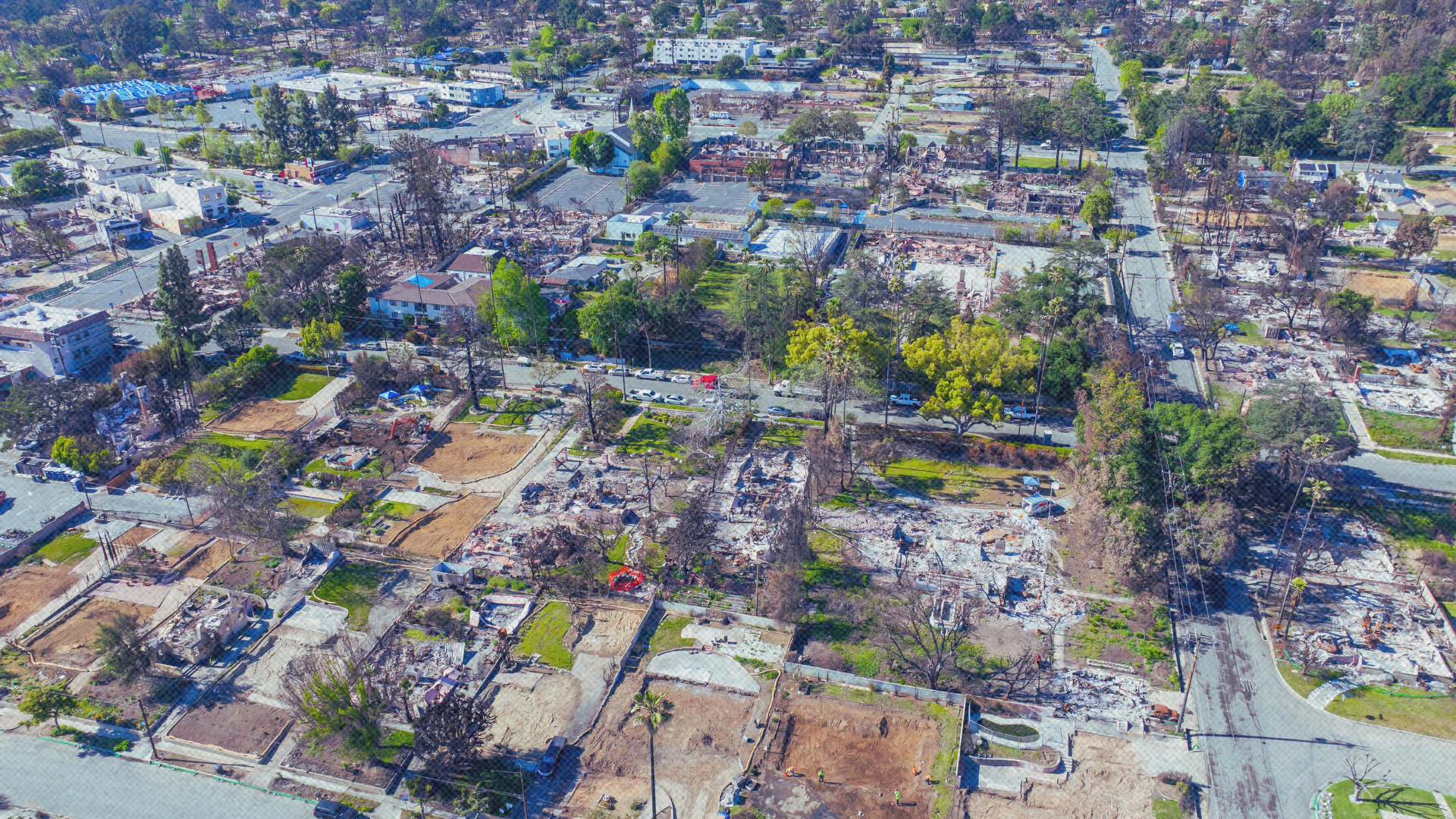
As wildfire severity has increased, residents in high risk areas have been lamenting their inability to access or afford property insurance. Due to increased risk, insurance companies have taken drastic measures, such as limiting business or pulling out of the state to mitigate potential losses. But with the introduction of catastrophe modeling, Californians might have a chance of obtaining insurance at better rates.
If California eases restrictions on rate filings, wildfire catastrophe modeling will allow insurers to prepare and price effectively for risk, allowing consumers greater access to insurance with potentially better prices.
The state insurance commissioner, Ricardo Lara, has attempted to reverse course on the state’s insurance crisis with the introduction of his Sustainable Insurance Strategy in 2023. This strategy is a series of steps addressing key property insurance issues, like rate review and transparency, and includes the implementation of wildfire catastrophe modeling.
This strategy is supposed to help solve the strain on the state’s FAIR Plan, a state-based insurance that covers consumers who can’t obtain coverage elsewhere. It has been stretched thin in areas prone to wildfire making this last-resort-insurer less of a backup option than originally intended. Instead, it’s quickly becoming a popular option for insurance.
Catastrophe modeling combines historical data along with sophisticated probability formulas to determine what natural catastrophes will occur in a given location and how much it would cost an insurance company to recover from the losses. These models predict future catastrophic events based on terrain, wind patterns, similar historical events, and weather patterns. Formerly, only historical data was used to determine future risk; however, as weather events become frequent and unpredictable, occurring in areas not normally prone to certain natural disasters, these models have become vital. Before catastrophe modeling, insurers had the potential to go bankrupt from only one catastrophic loss.
The use of catastrophe modeling for ratemaking is strictly regulated to ensure companies are using the standards of practice defined by the Actuarial Standards Board. Companies must use accurate and timely figures in their models and sound statistical information. This includes accounting for mitigation efforts completed by the insureds. Further, to have their models approved for use in the state, vendors go through a lengthy application process. This process involves the use of submitting various documents on model methodology and strenuous testing ensuring that the model is fair and accurate.
The state of California currently allows the use of catastrophe modeling for earthquakes. Commissioner Lara is now allowing the use of wildfire catastrophe modeling for rating purposes which will determine the premiums insurance companies are allowed to charge. This means insurance companies will be allowed to submit rate filings that include catastrophe factors pertaining to wildfire risk. Proposition 103, the state’s notorious insurance regulation enacted in 1988, allowed catastrophe factors to be used but rate proposals had to be based off historical data. With this new strategy, wildfire catastrophe factors can be based off a combination of predictability models and historical data, providing accuracy in risk assessment.
However, there is a catch. Insurance companies that use these models are required to cover an 85 percent property minimum. This means that for large insurance companies, 85 percent of their statewide market share would have to be in high wildfire zones. For those companies that already meet this requirement, they will have to maintain that percentage. The intent to couple the use of catastrophe modeling and maintaining coverage is intended to move properties in high wildfire zones away from the FAIR Plan.
That sounds promising. For Californians, the main concern should be whether the state will approve the filed rates that are needed to offset future losses. Rate filing is the process by which insurance companies request changes to minimum premiums. In other words, it’s being able to price the risk. Proposition 103 requires that rates be approved before they are implemented (prior approval rate filing).
Mercury Insurance just filed new rates at 6.9 percent using the first state-approved catastrophe model. This is the maximum Mercury can request without going through their intervenor process. The process goes like this: filings at 7 percent or more are set on a long course to being publicly reviewed and potentially denied. While that appears to be a large increase, it really isn’t. S&P Global reported the industry saw an average 10.4 percent weighted increase overall in 2024 and 12.7 percent in 2023. The state of Montana saw a 22 percent increase. California’s rate increase approvals have been an issue since Proposition 103. This will be the biggest hurdle for insurers. If California can get the pricing right, the state might have a chance at a competitive market, at least where wildfire is concerned.
Implementing catastrophe modeling for ratemaking will encourage insurance companies to write again in the state. This will lead to more insurance options and better pricing for California insureds so long as regulators allow for rates to increase commensurate with the risk. Additionally, modeling will ensure insurers remain solvent by being able to prepare for future risk and set aside enough in their reserves for natural disasters. California consumers could use a win this year in property insurance.
Leah Locke is a policy analyst at the American Consumer Institute, focusing on finance and insurance policy. The American Consumer Institute is a nonprofit education and research organization. For more information about the Institute, follow us on X @ConsumerPal.