
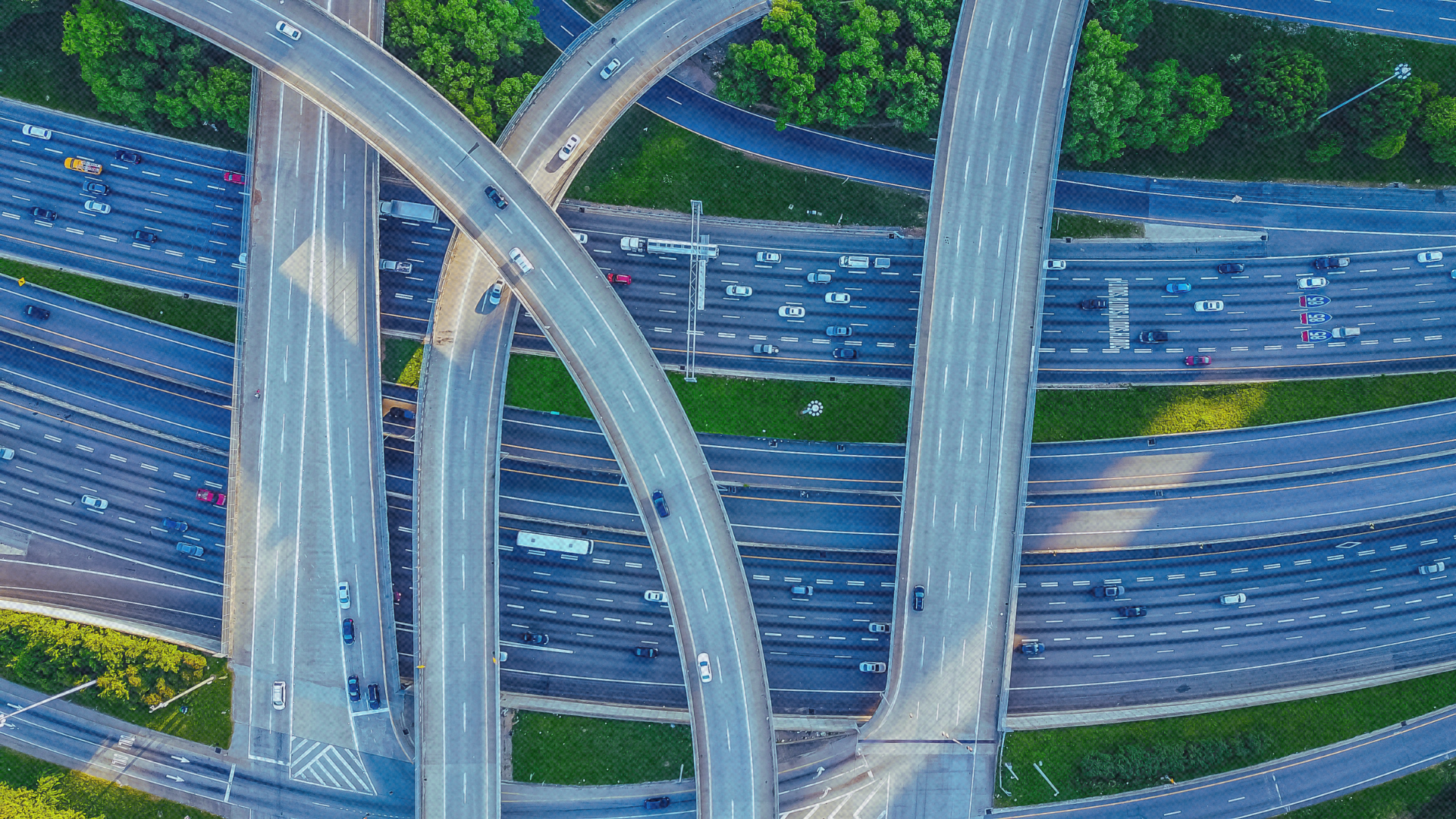
The Surface Transportation Reauthorization (STR), perhaps the single most important federal law governing how the U.S. moves people and freight, is quickly approaching. Completed every five years, the STR sets national transportation policy, funding levels, and priorities essential for movement, supply chain reliability, and economic prosperity.
ACI recently held a webinar focusing on three critical aspects of this year’s reauthorization: the Highway Trust Fund (HTF), technology, and permitting reform. All three will play major roles in shaping where transportation is headed. U.S. infrastructure faces much-needed upgrades and expansion coupled with rapidly increasing freight demand. Lawmakers must prioritize policies that foster efficiency, economic growth, and national security.
The HTF, which finances the construction and maintenance of the Interstate Highway System, is facing a projected $40 billion deficit by 2029. Under the current system which collects close to 20 cents per gallon of gasoline purchased, the HTF is becoming insolvent due in part to declining revenue from more fuel-efficient cars and increasing electric vehicle (EV) use.
Some potential solutions to revive the HTF include instituting a Vehicle Miles Traveled fee, a true user fee that applies to all vehicles that use the roads and highways. Currently, EVs contribute nothing into the fund; hybrids, very little. Yet, they benefit from the same roads internal combustion cars pay to maintain. Another solution would be to levy an annual $250 fee for EVs and a $100 fee for hybrids which would help raise HTF revenue and restore fairness.
Technology is also essential for the STR, playing an important role in rail safety; its implementation tactics are critical. The focus should be on outcome-based metrics rather than prescriptive regulations to encourage technological innovation while maintaining safety standards.
Technology is constantly improving, and a regulatory framework should be in place that allows advancements that keep consumers safe and lower the price of goods and services. For instance, high-speed imaging, artificial intelligence (AI) scans, drone use, and automated track inspection are increasingly being used to enhance the movement of goods and individuals on rail. AI could be leveraged for predictive maintenance, better traffic modeling, and optimizing freight logistics.
Permitting reform within the STR cannot be overstated; the broken system in place is obstructing essential infrastructure projects, making them slower, costlier, riskier, and even impossible to build. The average timeline to obtain the necessary permits to build roads, bridges, ports, and airports runs at least five to seven years. These delays often lead to higher capital costs (labor, materials, financing), project uncertainty, lost investment, and pushing industries overseas.
A few bills are making their way through Congress that aim to clamp down on the rampant litigation that plagues the process across all sectors. Both the SPEED Act and PERMIT Act will limit the ability to bring lawsuits against infrastructure projects in addition to reducing timelines, expanding categorial exclusions, and narrowing the scope of reviews. The reauthorization should incorporate its own set of statutes to increase efficiency: Reduce timelines, implement better funding mechanisms, incorporate stronger interagency coordination, and include more categorical exclusions.
Improving all three of these areas (the HTF, technology, and permitting reform) will enhance the STR by promoting sound infrastructure policies and procedures.
Transportation and Infrastructure Committee Chairman Sam Graves stated, “America is a nation that builds. We need to get back to building, and that starts with legislation focused specifically on improving our roads, bridges, and other surface transportation infrastructure.” Graves promises to get back to basics and focus on the most fundamental needs. Such a clear and definitive objective is needed to reform the HTF, incorporate technology, and fix a flawed permitting system.
Kristen Walker is Senior Policy Analyst and Manager for Energy and Transportation with the American Consumer Institute, a nonprofit education and research organization. Follow us on X @ConsumerPal.