
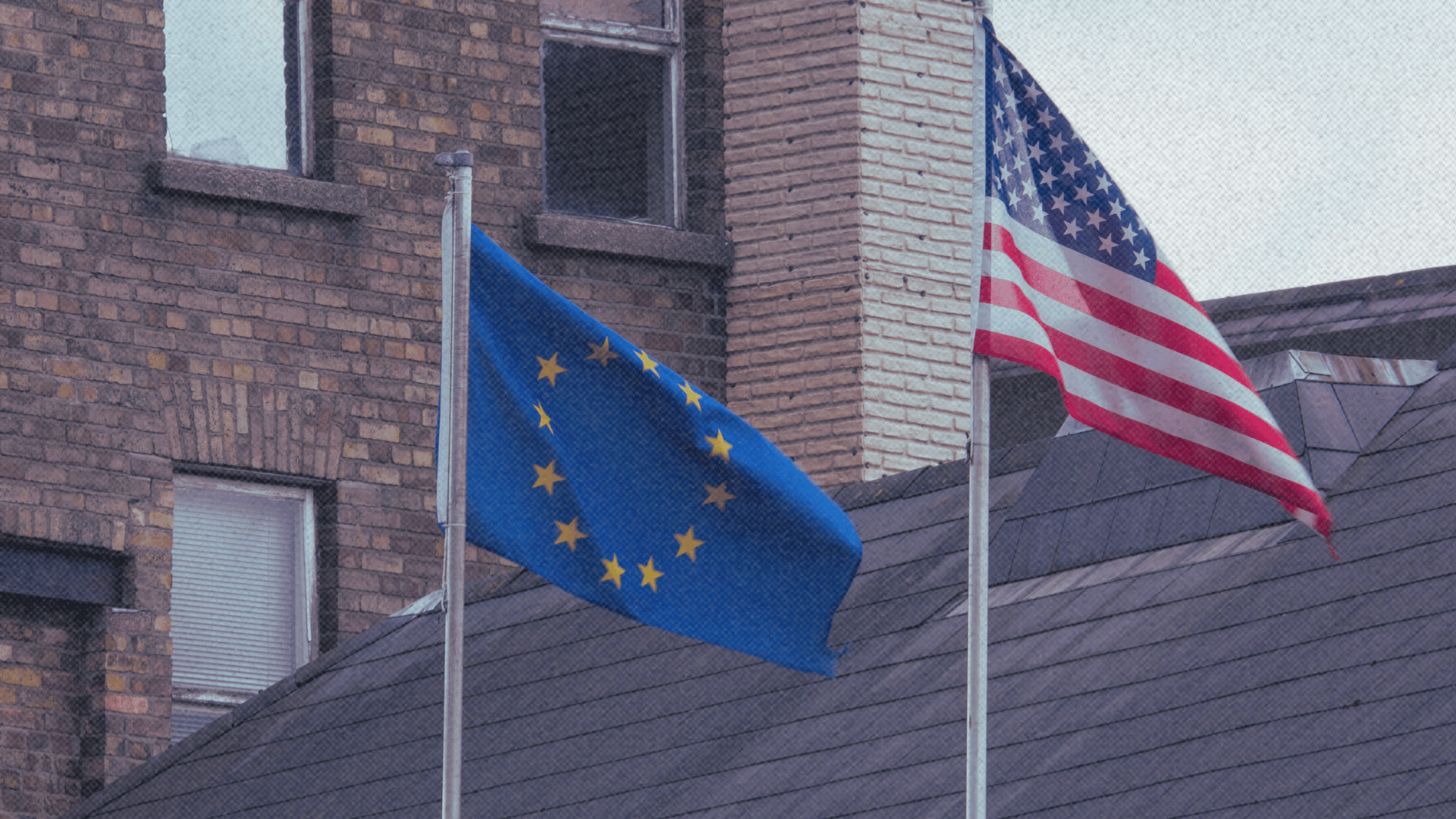
Earlier this month, the House Judiciary Committee made good on the American Consumer Institute’s call to hold a hearing on the nature of European technology overreach and begin to chart a path forward. This decision followed executive branch criticisms from Vice President JD Vance and FCC Chair Brendan Carr, who both voiced concerns over European regulation of free speech and the impact on U.S. technology innovation.
While the United States criticizes European technology regulation abroad, it is adopting European technology frameworks at home. Unfortunately, from speech and online expression to privacy and artificial intelligence, regulation has become the United States’ top European import.
In 2020, Europe opened a can of worms when it decided to regulate so-called misinformation, disinformation, illegal content, and hate speech under its Digital Service Act (DSA). That regulatory fervor quickly spread to the United States.
In the midst of a pandemic, a contentious presidential election, and widespread social unrest, U.S. lawmakers openly debated a U.S. version of the DSA. It was not long after that U.S. legislators introduced the Platform Accountability and Consumer Transparency (PACT) Act in 2021. This bill emulated the Digital Services Act (DSA) by policing online content under the pretext of removing “illegal content” and demanding stricter content moderation practices. While the intention to mitigate illegal content seems just, experience shows that enforcement of such laws often extends far beyond their stated intent.
Then, after holding several Senate subcommittee hearings in 2022, motivated by the praise European-style regulations on big tech were getting, Senators Blumenthal (D-CT) and Blackburn (R-TN) introduced the Kids Online Safety Act (KOSA). However, the European influence on the making of KOSA can be easily traced.
The UK had already drafted a white paper in 2019 that aimed to protect children online. This became the Online Safety Act (OSA), a restrictive and punitive proposal that passed in 2023. Its implementation earlier this year sparked outrage and sent droves of users to bypass the law with virtual private networks (VPNs).
Unfortunately, Europe’s OSA and the United States’ proposal, KOSA, share many similarities: age verification mandates, duty of care provisions, default safety settings, algorithmic regulation, and more. Even though KOSA didn’t get enough support to become a law in 2024, it was pushed again earlier this year while also spawning a wave of state-level proposals that pull from other European laws and speech regulations. To date, 24 states have passed age verification laws, and many more have introduced bills.
It’s not just age verification. In 2022, California explicitly mirrored the UK’s Age-Appropriate Design Code, with the California Age Appropriate Design Act (CAADA). With vague language and broad definitions, California’s law was quickly challenged in court and blocked on First Amendment grounds—even as Vermont and Nebraska passed their own versions, both of which are set to come online next year.
Congress and many states are importing Europe’s heavy-handed technology regulation agenda even as they denounce similar measures abroad. Consistency demands that the United States practice what it preaches. To solidify its critiques and avoid hypocrisy, the United States must reject overly restrictive Euro-style speech regulations at home.
Pablo Garcia Quint is a technology policy analyst with the American Consumer Institute, a nonprofit education and research organization. For more information about the Institute, follow us on X @ConsumerPal.