
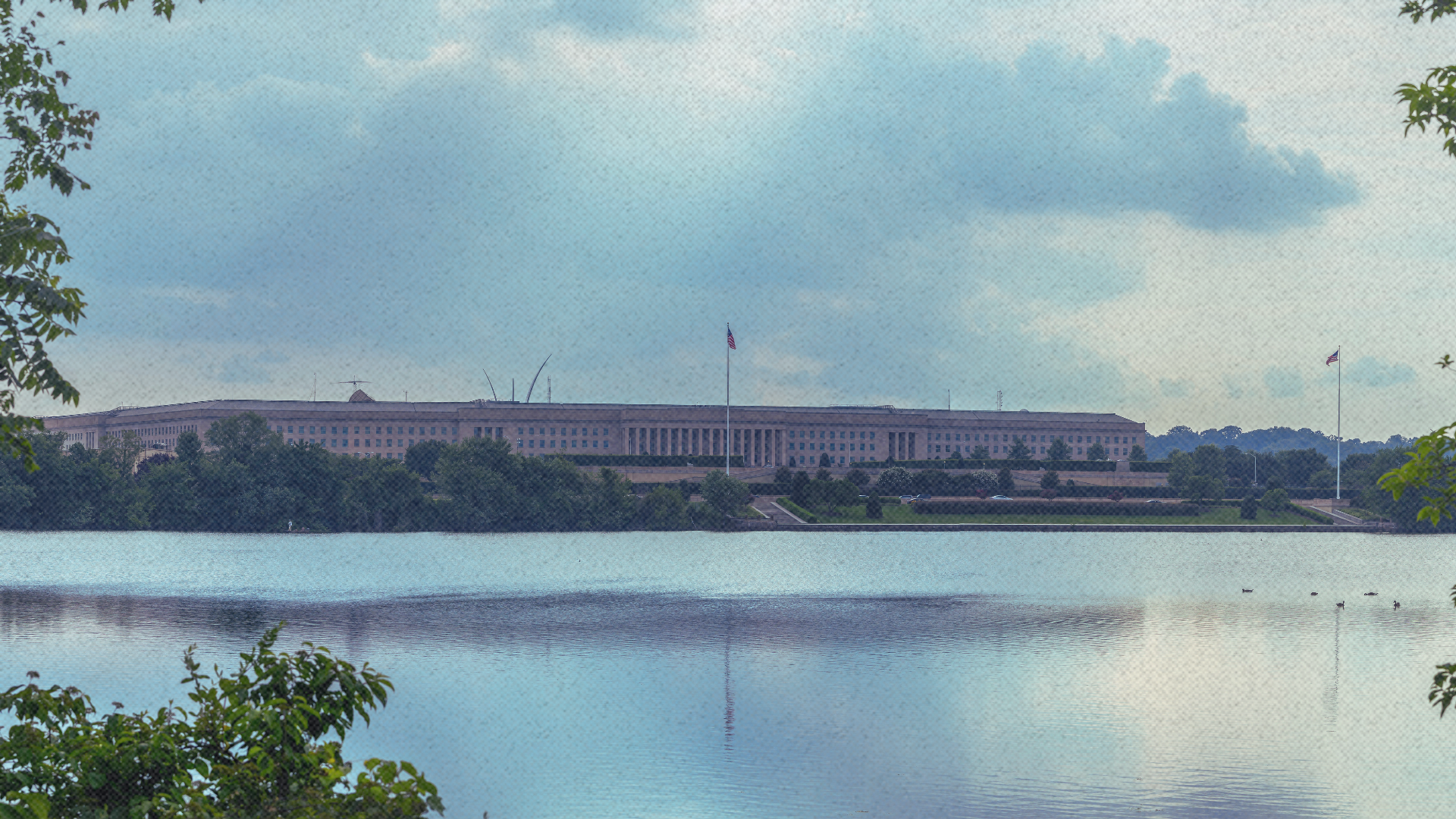
Political dysfunction is in the spotlight after a record-breaking government shutdown. But this dysfunction extends beyond obvious partisan clashes and into undermining good work already done. Earlier this year, Senators Ted Cruz, Marsha Blackburn, and John Thune successfully negotiated with Armed Services Committee Chairman Roger Wicker on how to serve consumers’ broadband future with a spectrum pipeline while safeguarding national security under the One Big Beautiful Bill Act (OBBB). Today, unfortunately, that success is in danger of breaking down with the addition of new veto powers in the National Defense Authorization Act (NDAA).
The Senate-passed version of the 2026 NDAA bill would give the Secretary of Defense and the Joint Chiefs of Staff the power to block any modifications to select spectrum bands. This new veto authority undermines the mandate to deliver new spectrum bands for commercial use, harms consumers, and risks ceding the 5G race to China. Stripping the veto language from the NDAA is the surest path to avoid negative outcomes
Adding new spectrum to commercial use is crucial for future consumer wellbeing. As more consumers get connected to the internet—96 percent of the population—they overwhelmingly prefer wireless devices, further crowding scarce airwaves. Furthermore, technological advancements in low-earth satellite and fixed-wireless access communications have made them competitive against traditional wireline internet providers, with both increasing their subscriber count to 2 million and 13 million in 2025, respectively. Americans are “cutting their cords” and trending more wireless.
As that trend continues—and as more users shift online—Spectrum demand will increase even as supply remains backlogged. That is because Congress let the Federal Communications Commission’s (FCC) spectrum auction authority expire in 2023. In fact, pre-OBBB estimates from the IT consultancy firm Accenture finds the United States will experience a shortage of spectrum by 2027. By 2035, as much as 75 percent of spectrum demand will go unmet.
This year, Congress finally restored the FCC and National Technology and Information Administration’s (NTIA) authority to identify, clear out, and auction federally occupied spectrum for commercial use as a part of the OBBB. Their success centered on careful political negotiation to carve out the 3.1-3.45 and 7.4-8.4 GHz bandwidths to be left out of auction considerations and solely for use by the Department of Defense, which holds most of the federally-held spectrum. The Act balanced consumer wellbeing and national security concerns by letting the DoD keep their most coveted range of bandwidth to consolidate their operations into so the rest could be freed up for commercial use.
Now, in the Senate-passed version of the 2026 NDAA funding bill, Section 1564 would give the DoD Chairman of the Joint Chiefs of Staff and Secretary of Defense veto power over any changes to the OBBB-protected bands, meaning one could block the other who might try to consolidate the DoD’s operations into those protected bands. The problem here is that blocking consolidation would effectively extend the veto power outside the protected bands, leaving operations as they are. Unless the NTIA can persuade the Chairman and the Secretary to cooperate with its recommendations, they can maintain the status quo across all the DoD’s currently held spectrum bands.
This can leave the NTIA far less spectrum to draw from, severely limiting its ability to free up more airwaves for commercial use. This in turn cascades back onto consumers who would experience worse interference and slower service as their allotted bandwidths become overcrowded. In short, the Section 1564 veto powers effectively undo Congress’s carveout negotiations, undermine the goals of the spectrum pipeline, subvert a Trump administration policy priority, and impose downstream harms on consumers.
Ironically, this should be as important an issue to the Department of Defense as any national security issue. Freeing up spectrum for commercial use allows the FCC to auction it to its “highest and best use,” where it can drive 5G and potential 6G advancements—areas where China already has a big lead. 5G patenting data finds that Chinese firms hold 40 percent of all 5G patents while the US, South Korea, and European Union lag between 15 to 20 percent. In a race to develop and deploy communications technology, failure to free up spectrum for American innovators to put to work means reliance on Chinese technology.
Section 1564’s new veto authority already passed the Senate, but the House of Representatives has yet to sign off. The rest of the 2026 NDAA is still up for debate, but continuing down this path would unwind a major achievement for consumers and for U.S. national security. The Department of Defense secured its carveouts in the One Big Beautiful Bill Act, and allowing it to protect its status quo outside those bands undermines the NTIA and FCC’s spectrum pipeline goals. But in the end, it’s the consumers who would be caught in the crossfire.
Nate Karren is a policy analyst with the American Consumer Institute, a nonprofit education and research organization. For more information about the Institute, follow us on X @ConsumerPal.