
For New Yorkers receiving Low-Income Housing Tax Credit (LIHTC), insurance premiums make up 22 percent of their total rent cost. The city council wants to address the high insurance rates, by creating an Office of Insurance Accountability. But if affordability is the target, the city should go after the real cost drivers, including the role the city itself has played.
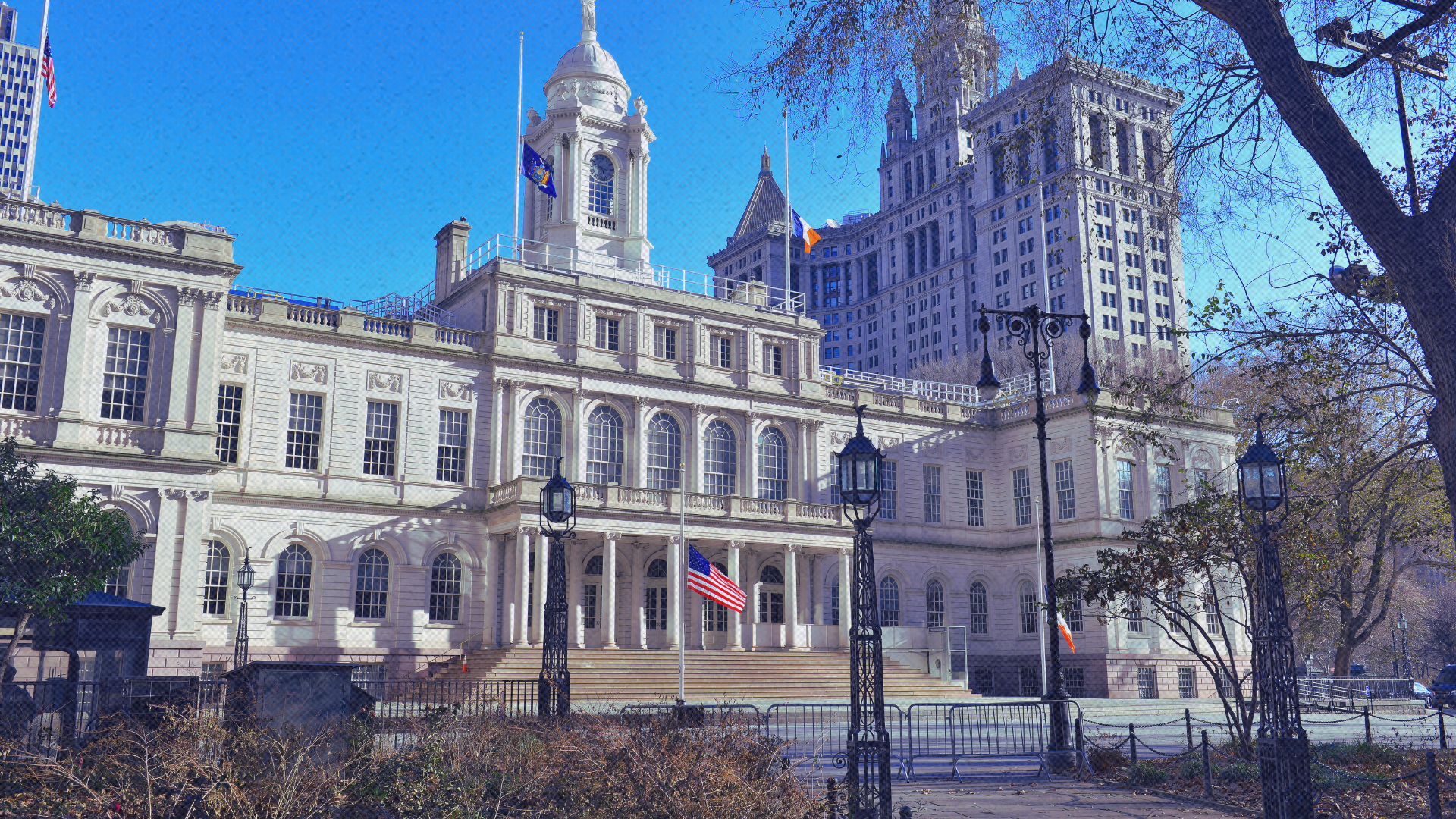
New York City council member and speaker Julie Menin held a press conference in late April announcing proposed legislation to create the city’s first Office of Insurance Accountability aimed at “[increasing] support for consumers, [enhancing] transparency, and [making] recommendations to stabilize growing costs.”
While the legislation appears to stem from a suspicion of the industry with accusations of predatory practices and transparency concerns, there is a fundamental misunderstanding of the industry and the nature of risk-based premiums.
There is no doubt insurance premiums have risen across the United States. A Yardi Matrix report from 2024 of multifamily properties across major metropolitan cities in the United States found that property insurance increased 27.7 percent year-over-year. Insurance costs rose most conspicuously in the states one would expect, like Texas and Florida, because of their volatile weather conditions.
Most surprising, however, is that insurance premiums did not spike in New York City with the intensity as the other 29 metro areas that Yardi Matrix studied. In fact, the national average was close to a 30 percent increase while New York was just under 10 percent. This data is echoed in a report by Trepp on property insurance year-over-year changes from 2021 to 2022 where places like Miami and Charlotte saw increases between 15 and 28 percent per unit.
The bottom line is that New York City did not grow as much as other cities in expenses or insurance premiums because they were already outpacing other metropolitan cities with high costs.
Costs and risk are high in New York City, and insurance premiums reflect that reality.
Housing is a prime example. Poor conditions, expansive liability, and out-of-control litigation make housing and everything else more expensive.
Insurers rely on risk-based pricing— the greater possibility of a claim, the higher the premium. Insurance underwriters often require pictures, proof of sprinkler systems, and maintenance records to assess a property for risk characteristics that could lead to costly claims. When a property is unkempt or violates safety codes, it can drive prices higher or prevent being insured at all.
American Enterprise Institute (AEI) analysis draws out of the Independent Budget Office’s (IBO) report quoting, “poor conditions are concentrated in rent stabilized buildings with a high share of stabilized apartments, (and) those with lower rents.” Ultimately, if buildings are not maintained, they will have higher premiums or will not be insured at all.
Buildings in disrepair are not just a rent-stabilized housing problem. In New York City, a high reliance on affordable housing paired with a lack of incentive to maintain dwellings combine to create a high-risk situation for insurers. The New York City Housing Authority (NYCHA) states that 1 in 16 New Yorkers take part in their rental assistance programs boasting that “NYCHA is larger than Atlanta or Miami.” But in their Physical Needs Assessment report from 2023, it was discovered that 47.96 percent of total rehabilitation costs fit within their “immediate action” time frame. For apartments, the report also found mold issues, “missing or non-functional smoke detectors… [and] antiquated or obsolete electric panels.”
Beyond the dwellings themselves, a significant portion of insurance costs can be attributed to the city’s need for tort reform. The state itself is highly litigious. New York City ranks second on the American Tort Reform Foundation’s most recent Judicial Hellholes list costing New Yorkers a “tort tax” of roughly $2,500 a year per person. Because of this, insurance premiums are high and so are “[residential] rents and prices for consumer goods and services,” according to a 2025 report by Partnership for New York City.
The New York City council wants to make the city more affordable by focusing their attention on insurance premiums. However, insurance premiums reflect their environment. The city has more control over these costs, and has, as seen, driven these costs higher by lack of reform and oversight of their housing programs. The city should focus on addressing housing conditions and pushing for tort reform. Higher insurance costs can be tackled, but it starts with the city making changes they can control which ultimately support a decrease in insurance costs.
Leah Locke is a Policy Analyst with the American Consumer Institute, a nonprofit education and research organization. Follow Leah on X @leahmlocke