
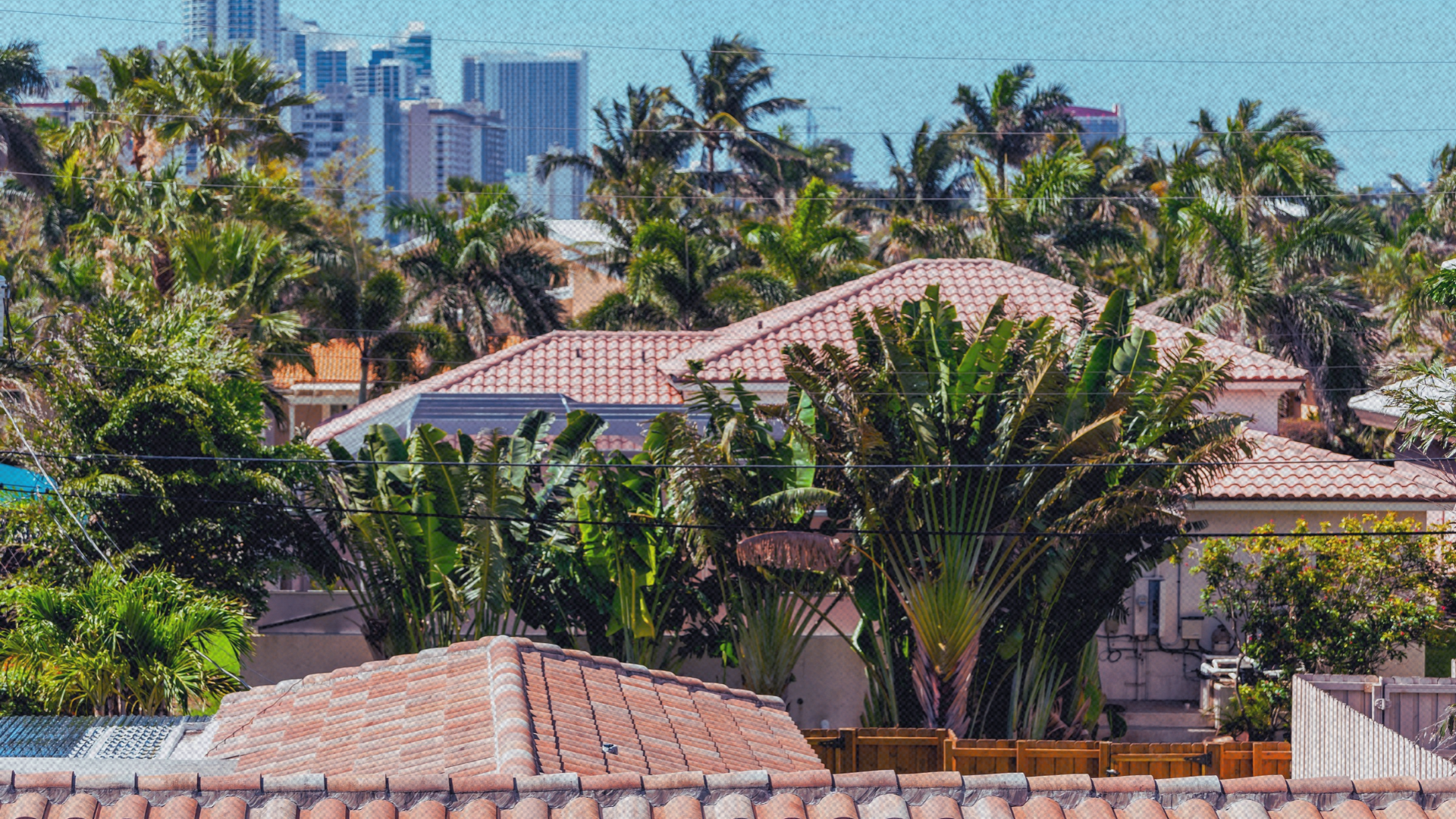
Four years ago, Florida began a series of insurance reforms to address skyrocketing costs in the state. One provision stands out to anyone unfamiliar with the details of Florida homeowners insurance: a limit on insurers’ ability to deny coverage based on a roof age. The rule looks narrow but hidden within this callout is the truth that Florida’s roofs contain valuable lessons about the insurance marketplace, namely that insurance, and its premiums are driven by risk.
In 2022, Florida’s insurance market was close to failing, with fewer options and rising prices. Some of that was unavoidable. A series of hurricanes triggered large payouts, and the constant threat of wind and flooding couldn’t be avoided without moving out of the area.
But even with the inherent risk due to the state’s weather, policy still has a role. When insurers are prohibited from pricing risk, the business model can’t function as it should. That has led insurers to shrink their business, not only in Florida before the reforms, but also nationally. A National Association of Insurance Commissioners (NAIC) report found that more than half of insurers reduced the number of policies they wrote between 2018 and 2024, even though they still operate across the country.
In their reforms, Florida lawmakers made a callout: insurers could not automatically deny coverage to a home with a roof under 15 years old. The rule may seem odd at first glance, but it illustrates how risk and incentives work in the market.
Roofs in Florida age quickly. Intense UV exposure, humidity, salt, wind, and rain shorten a roof’s expected life, so insurers may pay out on a policy sooner than they would in another state. That logic partly explains why, before the reform, homeowners could be denied coverage based on a roof age rather than its condition.
The reform brings coverage closer to actual risk. Insurers can still deny coverage for roofs older than 15 years after an inspection, with the goal being to protect consumers from buying new roofs they don’t need. Letting companies evaluate every roof based on risk without regulatory limits would be ideal, but the change is a step in the right direction.
Beyond weather and risk, roofs also highlight how lawsuits drive premiums.
In 2022, ACI explained how assignment of benefits (AOB) creates an incentive to sue and drives up insurance costs by increasing both lawsuits and unnecessary roof replacements.
AOB schemes were widely covered in the Florida news. Contractors promised homeowners a new roof if they signed over their right to file the claim. If the insurer denied the claim, the contractor sued, and the insurer usually settled rather than going through litigation.
Litigation raises insurers’ cost of doing business, and provisions like one-way attorney fees make it worse. Under one-way fees, insurers pay the other side’s legal fees if they lose but can’t recover their own if they win. The same principle applies well beyond roofs: more lawsuits mean higher costs.
Beyond bad weather and bad actors, government can also make insurance more expensive. Under prior rules, if 25 percent of a roof needed replacement, the entire roof had to be replaced. The recent reforms offered savings by eliminating that rule for most roofs built after March 1, 2009, allowing replacement of only the portion that needs repair.
Roofs are a narrow case, but they show how insurance works. Anything that raises risk, whether bad weather, lawsuits, or regulations that increase replacement costs, raises the cost of offering coverage. Insurers must collect more in premiums than they spend on claims and operations. When the spending side of that equation rises, premiums rise with it.
Tirzah Duren is the President and CEO of the American Consumer Institute, a nonprofit education and research organization. Follow Tirzah on X @tzduren