
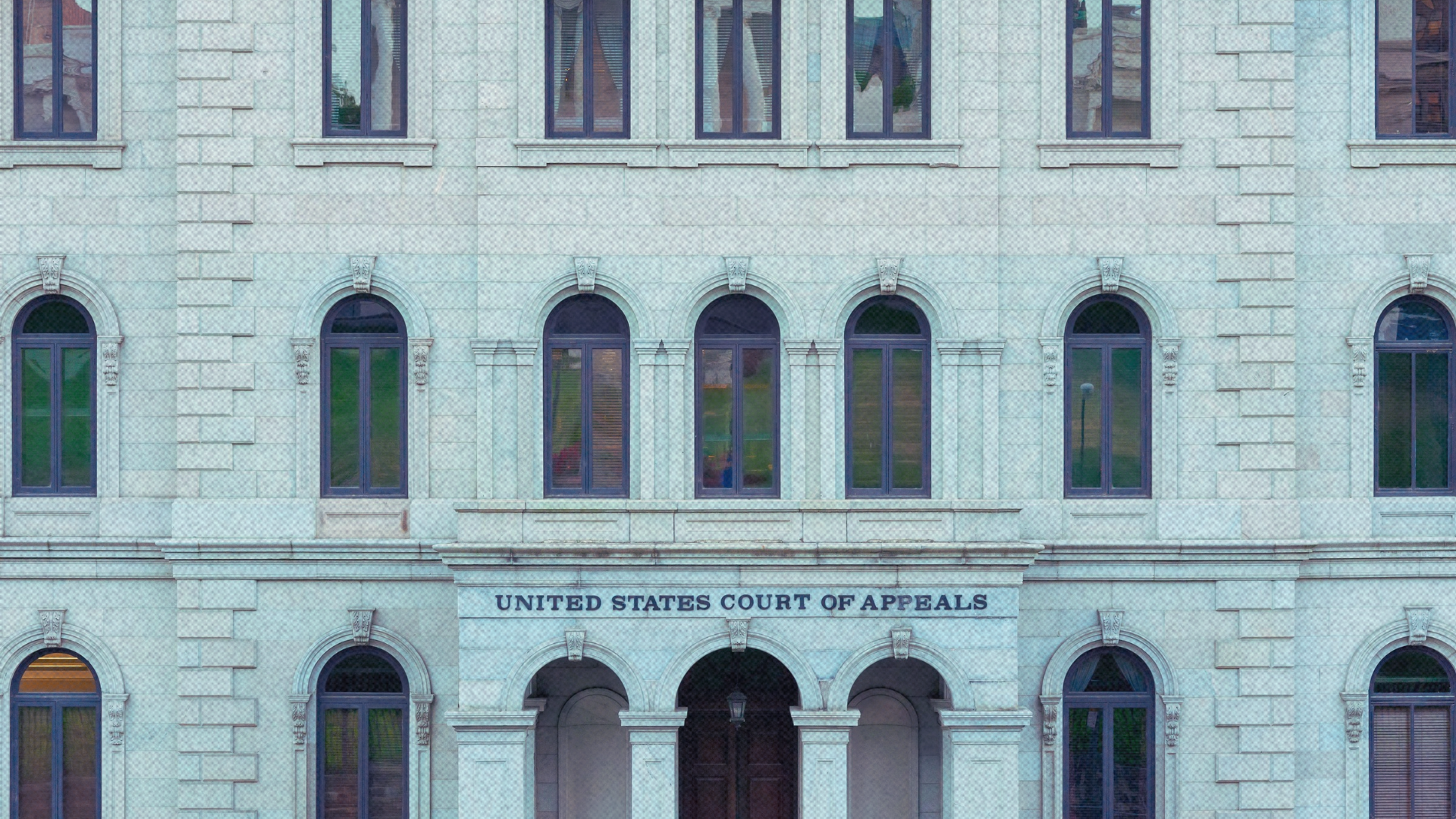
The Universal Service Administration Company (USAC) keeps running into legal challenges. Last month, the US Fifth Circuit Court of Appeals decided that the Federal Communications Commission (FCC) did not have the legal authority to set up and delegate Universal Service Fund (USF) management to USAC. Last year, the USF narrowly won a Supreme Court battle around the constitutionality of how it gets its funding. Each of these battles has been about how the USF operates.
What neither court case has settled, however, is if the USF should persist in its current form. As broadband infrastructure continues to expand across the nation and connectivity becomes increasingly affordable, policymakers need to take a close look at how the USF should look going forward. As they do, they must prioritize eliminating USF programs whose missions are complete and reform the rest to reduce as much burden on consumers as possible.
Make no mistake, the money poured into the USF is paid for by consumers. Every quarter, the FCC sets a contribution rate telephone carriers must pay into the USF—a percentage of money made on long-distance phone calls. Carriers pass that cost on to consumers. Over time, consumers have increasingly switched away from traditional phone plans to newer communications technologies, generally exempt from the USF contribution fee. As the payer base shrank, the contribution rate went up for those who stayed behind, prompting the Supreme Court showdown last year challenging the constitutionality of what was functionally a tax.
But fights over how the USF operates miss the bigger issue: the USF should not exist today at the same scale as before. Though the fund was created in 1997, its purpose was outlined by the Telecommunications Act of 1934 nearly 100 years ago: ensure rapid, reliable, and affordable access to communications services across the nation. Today, 97 percent of Americans have access to high-speed internet, and a combination of private investment and the Broadband Equity, Access, and Deployment (BEAD) program is slowly but surely closing the remaining 3 percent gap.
As for affordability, previously siloed markets for phone carriers, satellites, fiber, and cable providers have converged, pitting all competitors against one another for the same residential consumers. As a result, prices have fallen year after year and are consistently one of the most affordable items in consumers’ budgets. The need for USF is not nearly as pressing today as it was three decades ago.
Accordingly, some USF programs have become obsolete or duplicative in today’s modern broadband landscape. For example, the BEAD program directly mirrors the High Cost program, which subsidizes broadband expansion when building in remote and uneconomical areas. In the private sector, advances in wireless and satellite-provided internet have made them viable alternatives for connectivity. The ability to deploy these technologies without building miles of wireline through difficult terrain and across a patchwork of rights-of-way changes the calculus around connecting the most remote consumers. High Cost’s mission is coming to a swift close, and policymakers should retire it once its purpose is fulfilled.
Unlike BEAD, which is a massive, one-time investment, E-Rate and Rural Health Care are ongoing operational broadband subsidies for schools, libraries, hospitals, and rural clinics. They overlap. Once BEAD has completed connecting the last household, billions in expected leftover funds can legally be put towards the same non-deployment uses the two USF subprograms cover. E-Rate and Rural Health Care will have to adapt to a post-BEAD world.
As for USF’s Lifeline program, reform is needed regardless of court battles or broadband buildout. Meant to subsidize connectivity for low-income households, Lifeline has, in reality, become riddled with abuse. Recent reporting found that opaque USAC management of USF funds has allowed Lifeline to pay out millions for deceased subscribers, with a pattern of abuse stretching all the way back to the ‘90s.
The Fifth Circuit’s decision highlights an opportunity for Congress to bring USF management entirely in-house—subjecting it to routine Congressional budget decisions. The increased scrutiny from elected lawmakers can bring more fraud to light, reducing the amount that gets paid out needlessly. Safeguarding Lifeline funds for living consumers can reduce the burden on telephone customers.
All told, repeated court cases challenge how the USF operates, but they don’t tackle the harder question of whether it belongs at all. The FCC and Congress both have an opportunity to eliminate and reform USF programs that everyday consumers pay to support. No court ruling, unfavorable or otherwise, can change the reality that reform is needed.
Nate Karren is a Policy Analyst with the American Consumer Institute, a nonprofit education and research organization. Follow Nate on X @NateKarrenOnX