
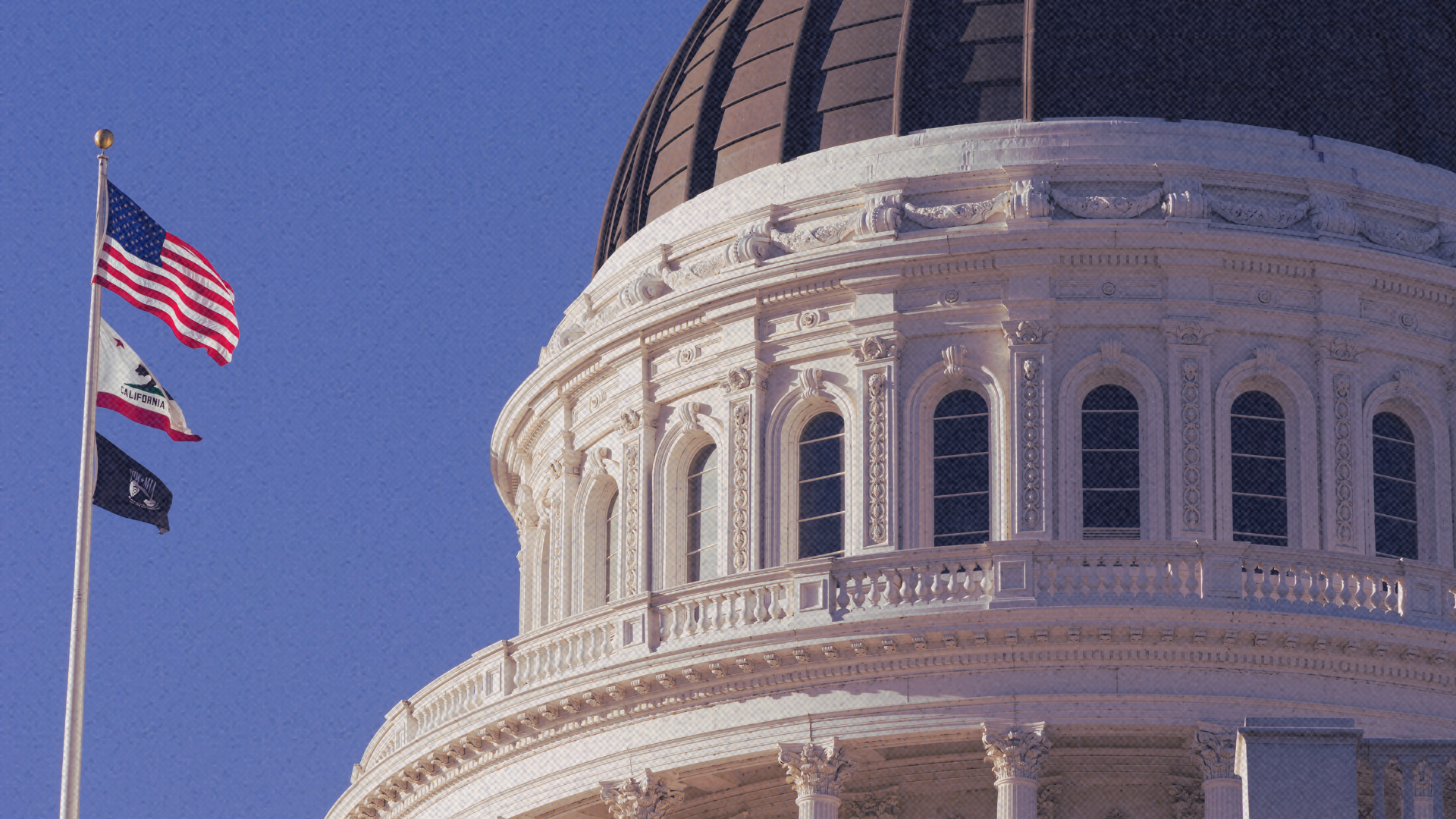
The White House recently released its National Policy Framework for Artificial Intelligence, a blueprint that calls on Congress to preempt burdensome state AI laws and establish a unified national standard. This framework marks an important moment for national technology policy because it addresses the growing crisis of states — especially California — attempting to dictate policy for the entire nation.
A coherent national policy is essential for both economic and geopolitical reasons. As the United States races against China for global leadership in advanced technology, California is rushing to impose its will on companies and consumers before the federal government acts. In its haste to regulate and set the rules, California is creating heavy compliance burdens — especially for small businesses — and opening the door to lawsuits that exploit vague definitions and open-ended bill language.
Unsurprisingly, California’s headlong sprint to always be the first state to regulate has positioned it as one of the country’s leading troublemakers when it comes to AI policy. Politicians in Sacramento know better than anyone that the state’s massive economy means it can often muscle everyone else into submission. What California says goes well beyond its borders — and they know it.
Adam Thierer is a Senior Fellow for Technology and Innovation at the R Street Institute. Logan Kolas is the Director of Technology Policy at the American Consumer Institute. Follow Logan on X @Logan_Kolas