
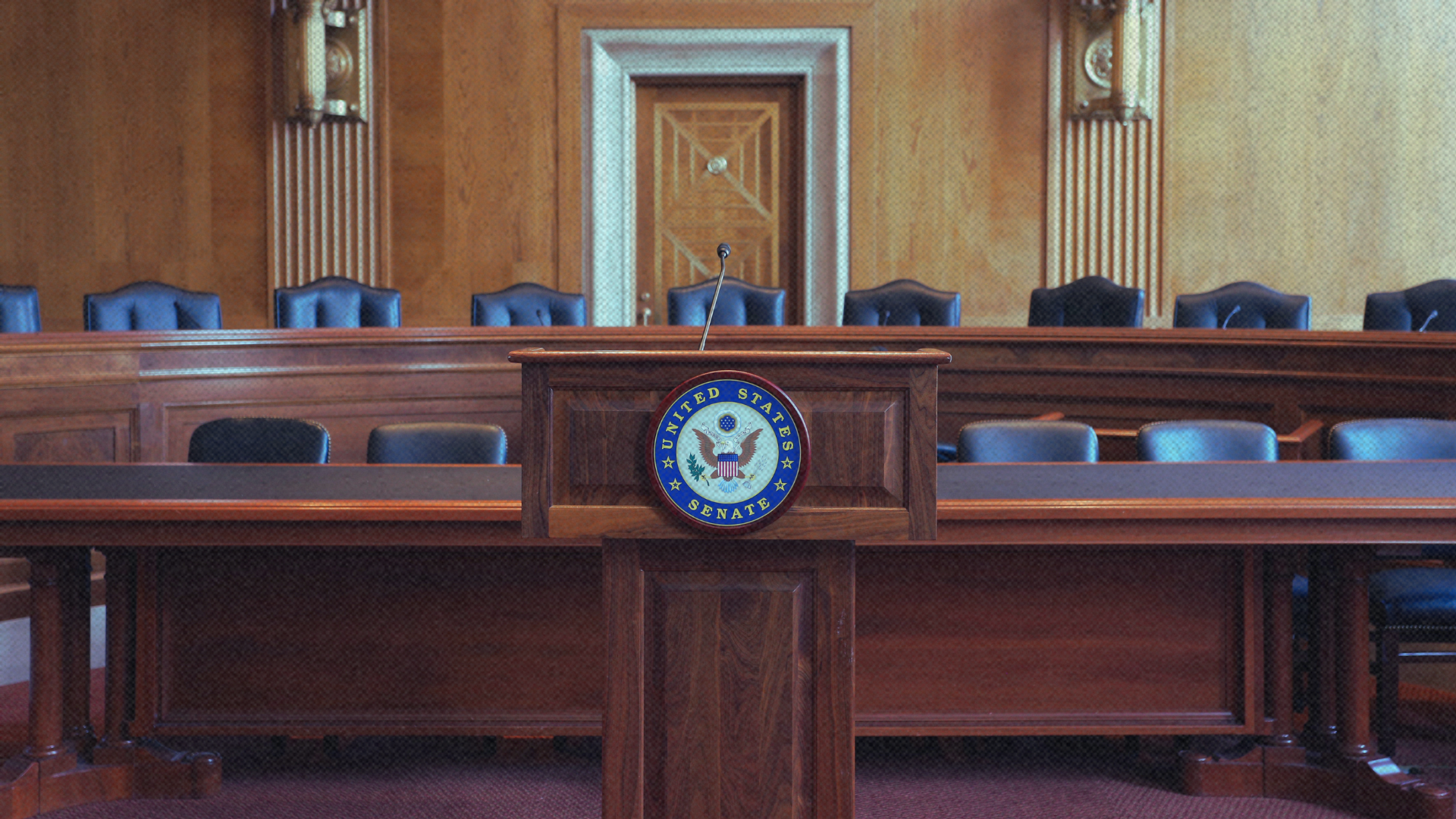
The internet is the backbone of the modern economy. And at the end of July, the United States Senate discussed how to preserve and enhance people’s economic opportunity at a time when artificial intelligence-driven data traffic crowds the world wide web.
As American Consumer Institute research concluded in February, full participation for all consumers in a new artificial intelligence-powered digital age requires an overhaul of the country’s existing broadband networks. However, upgrades are severely inhibited by slow-moving project permitting regulations.
Artificial intelligence is dramatically changing the way internet traffic operates. According to the networking giant Cisco, AI generates up to 450 percent more data traffic per task and utilizes far more upstream bandwidth than human actors. Industry predictions from Nokia, meanwhile, expect consumer network traffic to increase by as much as 6 or 9 times between 2023 and 2033. AI is changing how networks must handle traffic.
This is bad news for a significant portion of wired broadband consumers. As of December 2025, 20 percent of these consumers get their internet through the same copper wiring as their telephone service. In June 2022, that figure was 33 percent. Consumers who only receive 30 megabits per second download speeds, with even slower upload speeds, understand that copper-wire internet falls far below the national average and are switching as fast as they can. After all, as 2025 research demonstrates, slow internet holds many Americans back from full participation in the modern digital economy, and modern technologies like fiber optics, cable, and ever-improving fixed wireless access can deliver the far greater upload speeds copper lacks. Without upgrades to copper networks, their subscribers are at a severe disadvantage.
Congress is right to consider the obstacles to modernizing America’s communications networks, and their late-July hearing identified the biggest holdup: permitting. During his testimony, panelist and USTelecom President Jonathan Spalter detailed how delays in the permitting process effectively halt broadband deployment progress across several states, federal lands, and even when trying to cross new transmission lines under railroads. Additionally, the Government Accountability Office (GAO) found that half of all reported federal land applications were delayed beyond legal deadlines. Such delays can cause projects to miss their allotted construction window, driving up costs for internet service providers (ISPs) and keeping reliable connectivity out of reach for underserved Americans.
That is why other federal actors have been working to streamline broadband construction policies. In March, the Federal Communications Commission (FCC) voted to eliminate all federal filing requirements for ISPs replacing old copper wiring with modern technology and to override state-level rules that would inhibit federally approved copper retirement. Unfortunately, California regulators are pushing back in an ongoing court battle—despite public comments illustrating the FCC’s strong legal basis for preempting state law.
Furthermore, in the Uinta Basin Railroad case last year, the Supreme Court decided that environmental reviews must limit their scope to the immediate impact of a project. This ruling ends a longstanding practice of invoking endless possible downstream effects to halt construction projects, which contributes as much as 30 percent of a project’s total cost. These actions have significantly chipped away at broadband deployment hurdles.
While other federal actors are reforming permitting regulation, permitting law requiring extensive reviews remains unchanged. Executive and Judicial authority can only provide so much relief without Legislative action. Thankfully, Congress already has several pro-consumer bills before it that can deliver lasting change. For example, the Standardizing Permitting and Expediting Economic Development (SPEED) Act, currently before the Senate, would codify the Supreme Court’s decision into law, backing the decision with statutory authority will give certainty to broadband investment going forward.
Additionally, the Accelerating Broadband Permits Act would direct federal agencies to clearly track their permit processing times and flag any applications on track to miss federally mandated deadlines. The CLOSE THE GAP Act offers yet another approach, excusing projects from environmental review if they are being built on existing broadband infrastructure or built on federal lands that were already reviewed for a previous project. These could each have a large impact on the current slow and burdensome permitting regime. Congress is on the right track and should pass laws that would accelerate much-needed network upgrades.
Artificial intelligence is transforming how America’s networks handle digital traffic, and major upgrades are needed to ensure every American consumer can participate fully in the new emerging digital economy. The Senate’s July hearing effectively highlighted the outsized impact permitting has on slowing down the broadband buildout. Congress should pass pro-builder laws to match the pro-consumer actions taken by the other branches of government. With a streamlined, less burdensome permitting process, ISPs can more easily bring consumers full-speed connection nationwide.
Nate Karren is a Policy Analyst with the American Consumer Institute, a nonprofit education and research organization. Follow Nate on X @NateKarrenOnX